The biggest energy losses rarely look like energy losses
Production, maintenance, quality, and electrical teams can each make a reasonable decision and still create an expensive outcome for the plant.
A furnace running before its load is confirmed does not look like an energy problem. Neither does a half-filled heat-treatment basket, a finishing line running below capacity, or a CNC cell sitting idle between jobs. They look like ordinary production decisions. Repeated across a plant, they become a cost.
A Faridabad precision manufacturing operation makes the problem clear. Forge and press work feed into heat treatment, CNC, finishing, inspection, and despatch. The departments look separate on an organisation chart. On a live shift, they are tightly connected: what happens in forging changes heat-treatment loading; what happens in heat treatment changes machining availability; what happens in machining changes finishing and despatch.
The problem is not simply how much electricity the plant uses. It is when, why, and under what production constraint it uses it. The useful question is whether the plant can distinguish a necessary operating condition from an avoidable one, and act before the cost is locked in.
When power gets tight, the plant needs a decision hierarchy
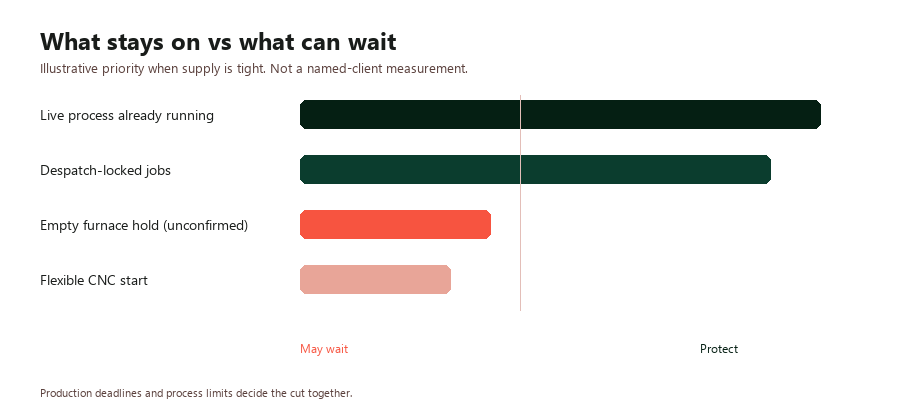
Mid-shift, the plant is not asking for a lecture on energy strategy. Grid dips, genset limits, feeder restrictions, solar cuts, or too many large starts at once leave the electrical team with a practical question: what stays on, and what can move?
That decision is meaningless without process context. A furnace with a live load already in soak is not the same as an empty oven held at temperature before the next charge is confirmed. A finishing process already running is not the same as a finishing start that has not begun. A customer truck locked for the evening is not the same as a flexible CNC start that could move twenty minutes.
Metallurgy and quality already know the hard stops. You do not interrupt a qualified process halfway through a run because the energy team wants a cleaner bill. You do not rewrite a proven recipe to manage a short power constraint. Those limits are non-negotiable.
Production deadlines sit alongside them. Which jobs are tied to a despatch window? Which starts can move without affecting OTIF? Which delay simply moves work later in the shift, and which one creates overtime or a customer miss?
The plant needs those constraints in one place before the next bad afternoon. The priority is straightforward: protect processes that cannot be interrupted, protect commitments that cannot move, and identify the starts that can be shifted with the least downstream consequence.
That is where Stamped fits. It brings plant state, production context, and energy conditions into the same decision, then puts the recommendation in front of the person who owns it. The plant decides what happens next.
The operating patterns that drive avoidable energy cost
After looking across forge, heat treatment, finishing, and machining, the recurring problems are not dramatic failures. They are ordinary operating mismatches that repeat often enough to matter.
Empty furnaces held hot before the next load was confirmed
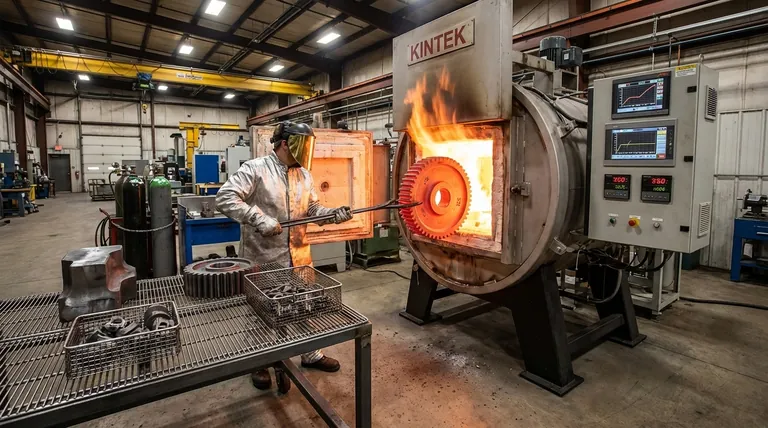
Furnaces can remain at temperature while the next charge is still pending inspection, staging, or production confirmation. Holding temperature can be the right call when the load is genuinely imminent. It becomes waste when nobody can establish whether that load is actually coming next.
The answer is not to drop temperature on instinct. It is to put charge status, expected readiness, and competing production priorities in front of the HT supervisor and production together, so they can decide whether to hold, delay a start, or close the upstream gap.
Heat-treatment cycles that run light when a compatible fill exists
Heat-treatment baskets can leave under-filled even when the recipe is valid and the process limits are unchanged. The plant still consumes a full cycle's energy and attention for fewer kilograms than the furnace could have taken.
Sometimes that is the right trade-off. A dispatch commitment can make the decision obvious. The opportunity is in the cases where a compatible fill exists later in the shift and the decision was not made early enough.
The useful intervention is not a rule that every furnace must wait for maximum fill. It is to surface the under-fill while there is still time for production and metallurgy to choose: consolidate, move the load, or release it as planned.
Rising furnace energy with the same output and the same recipe
Some cycles can look normal on production count while the furnace uses more energy than comparable earlier runs of the same recipe and charge family.
That can point to issues such as seals, air-fuel balance, door behaviour, infiltration, or burner condition. The first step is to establish that the increase persists across comparable runs before anyone changes the process.
If an energy tool's first recommendation is to cut soak or alter ageing to save units, it has already lost the room. The useful output is a matched comparison that gives maintenance and process engineering something specific to investigate without touching metallurgical limits.
Handoffs that create avoidable thermal and machine time
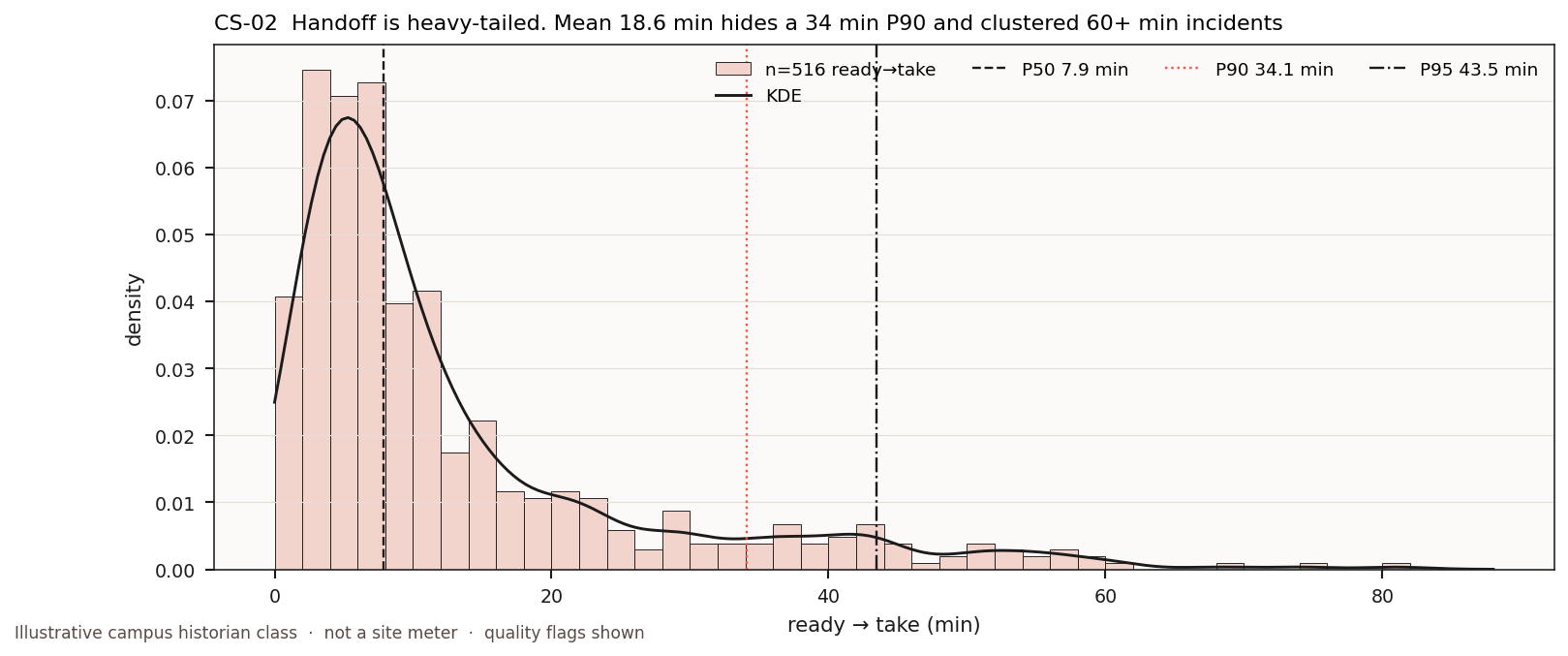
Between forge and press, between heat treatment and the next charge, and between racking and the hoist, the same pattern can appear: one station is ready and consuming time or heat while the next constraint prevents the work from moving. Each department can still look busy. The order simply is not moving.
These gaps are easy to miss in a single-machine dashboard because neither machine is necessarily “broken.” The issue sits between them. Closing it means seeing both sides of the handoff and deciding whether to stagger the upstream start, move a compatible job, or confirm the next station before the thermal window is lost.
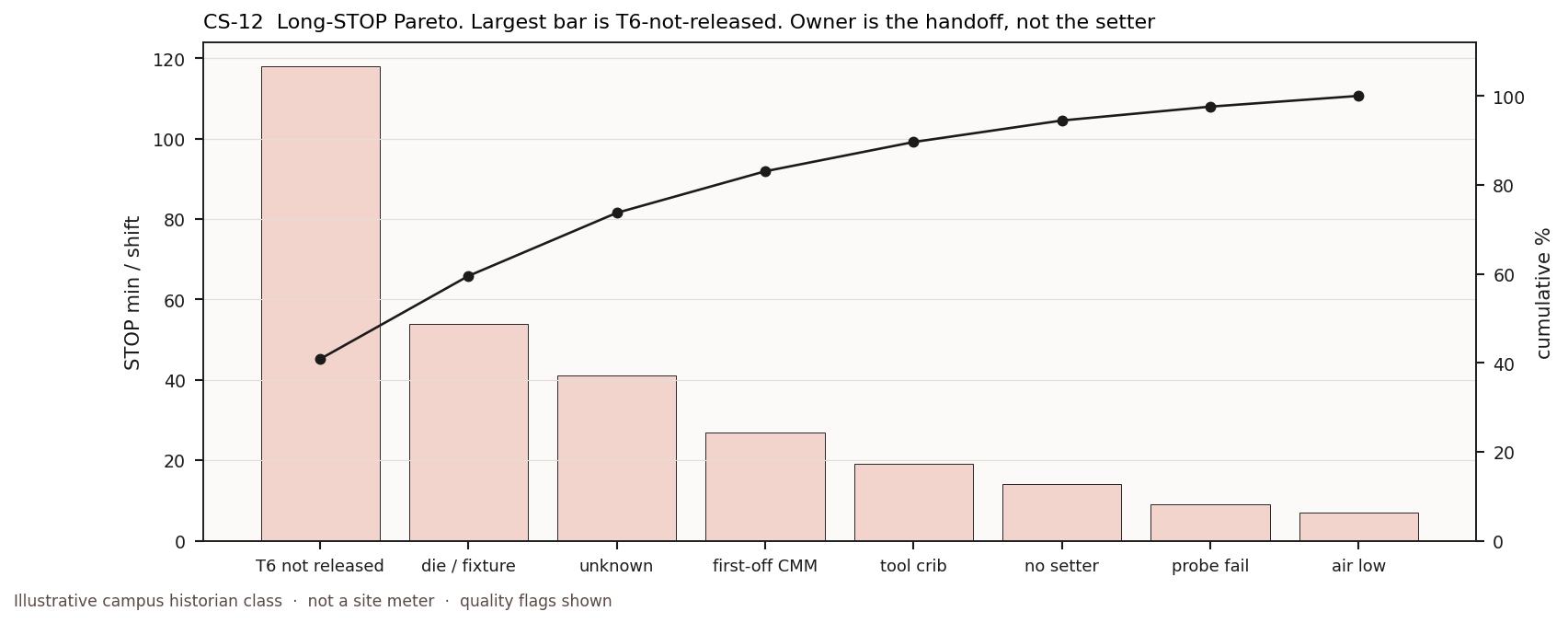
The expensive cases tend to sit in the long tail of those handoffs, not in the average.
Finishing racks that are empty or thin while the rectifier still runs full
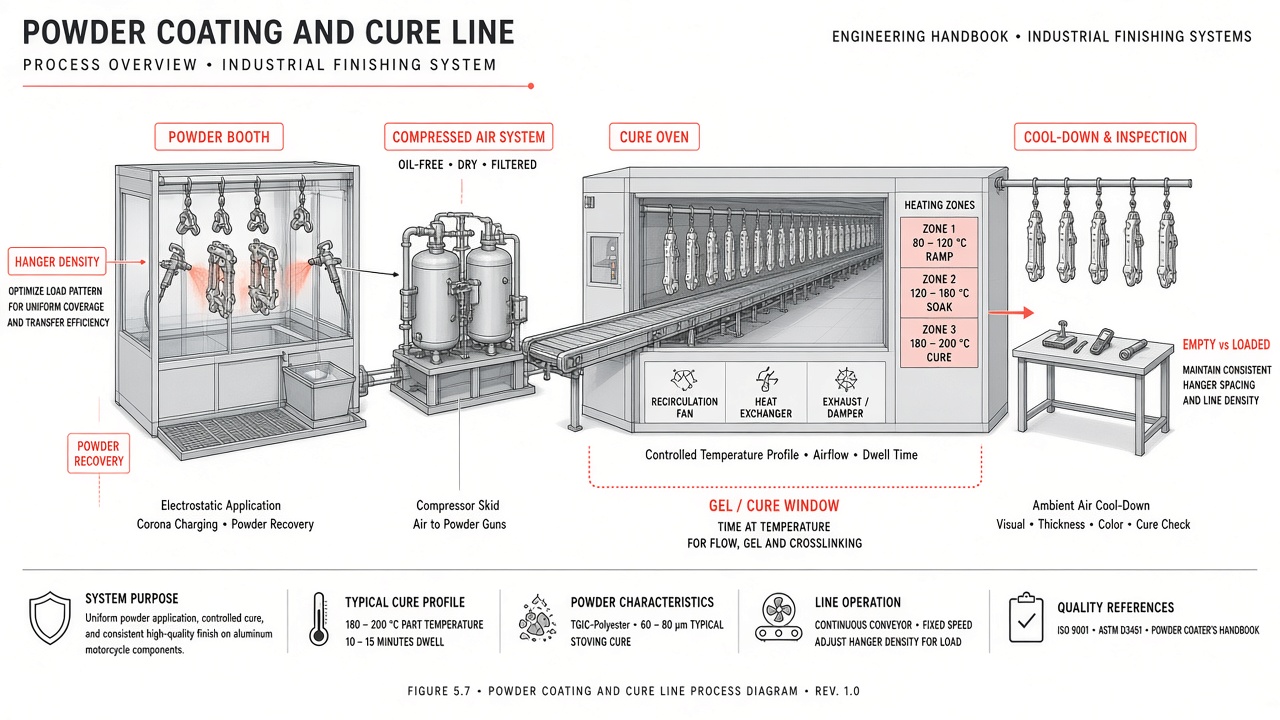
On finishing, thin or empty racks can still pull full process power for the cycle that follows.
The temptation in energy conversations is to shorten the finishing recipe. That is usually the wrong lever. Qualified process limits stay fixed.
The lever is loading and start timing: sequence a denser rack when quality allows, delay the start when the downstream schedule allows it, or accept the thin run when dispatch matters more. The important thing is that the trade-off becomes explicit rather than accidental.
Separating process stops from genuine idle time
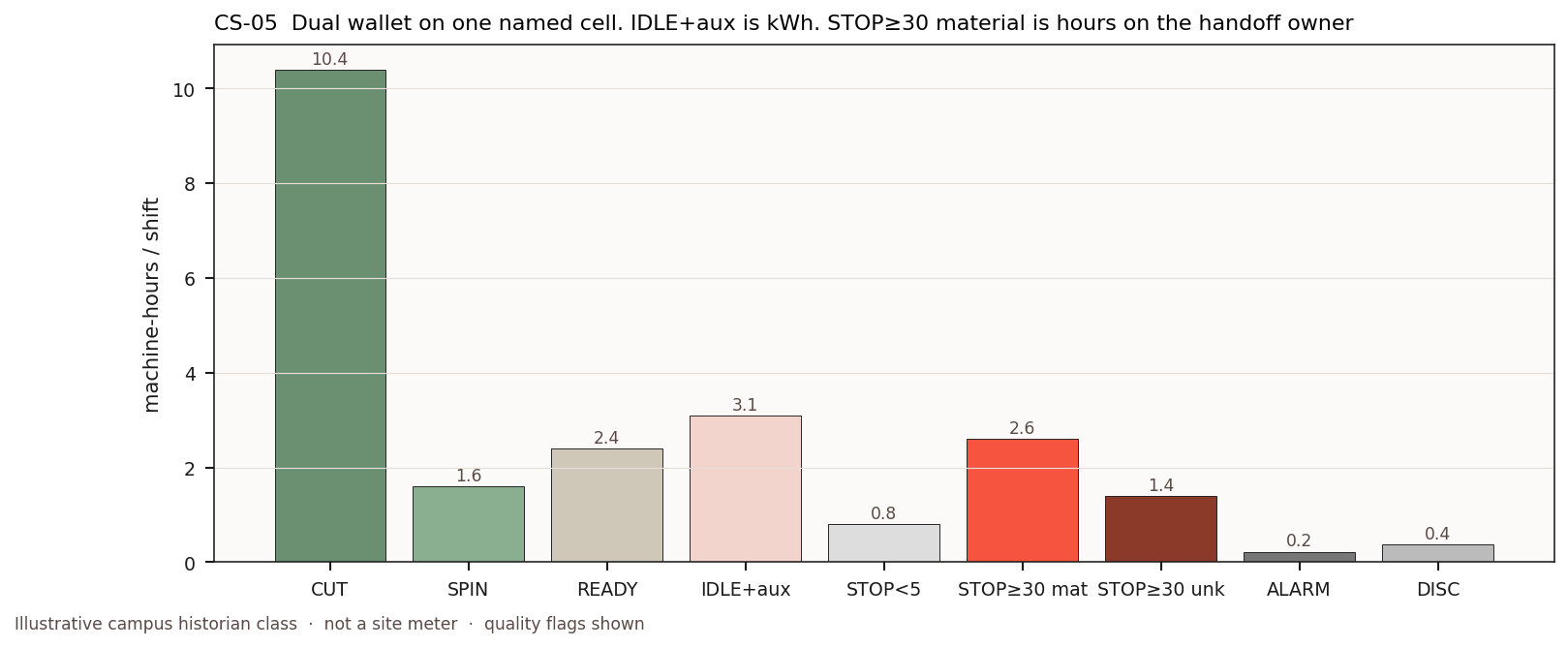
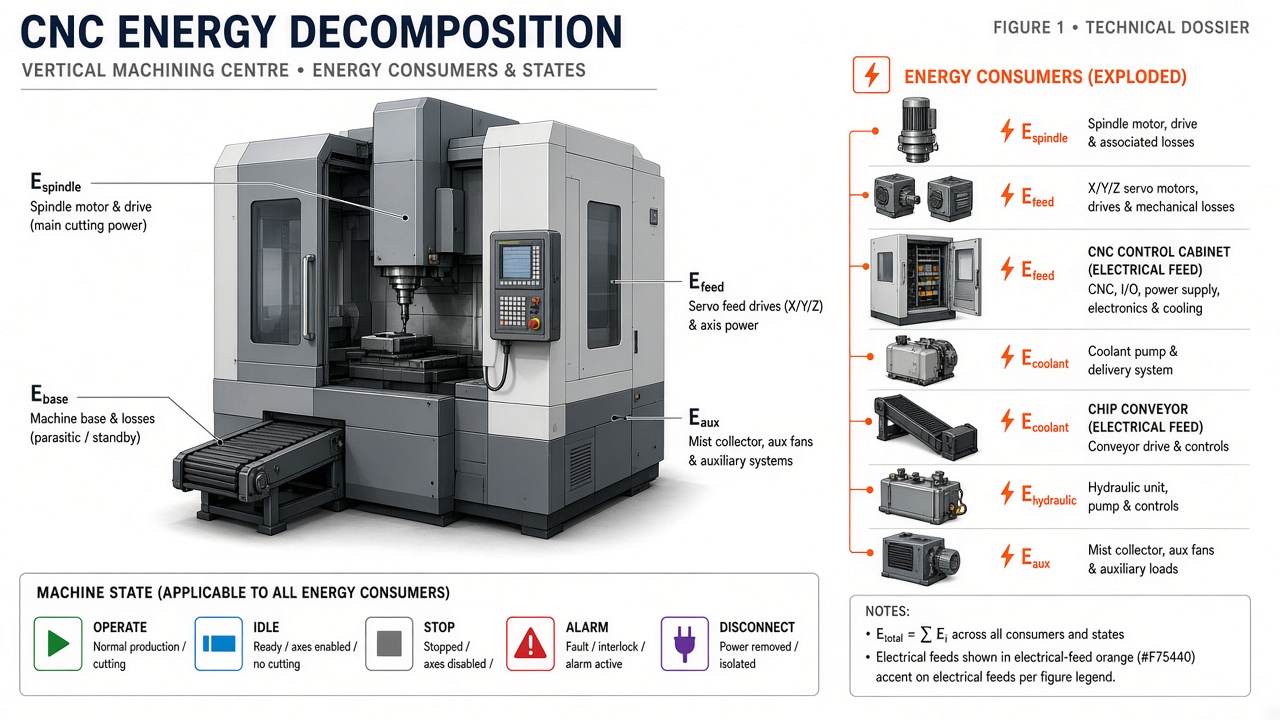
On the CNC side, the useful signal is not every time a machine leaves OPERATE. Stops shorter than about five minutes are often part of the process: tool changes, fixture work, chip clearance, or the next cut.
Treating those as energy waste only creates noise. It also teaches the shop that the energy team does not understand how machining actually works.
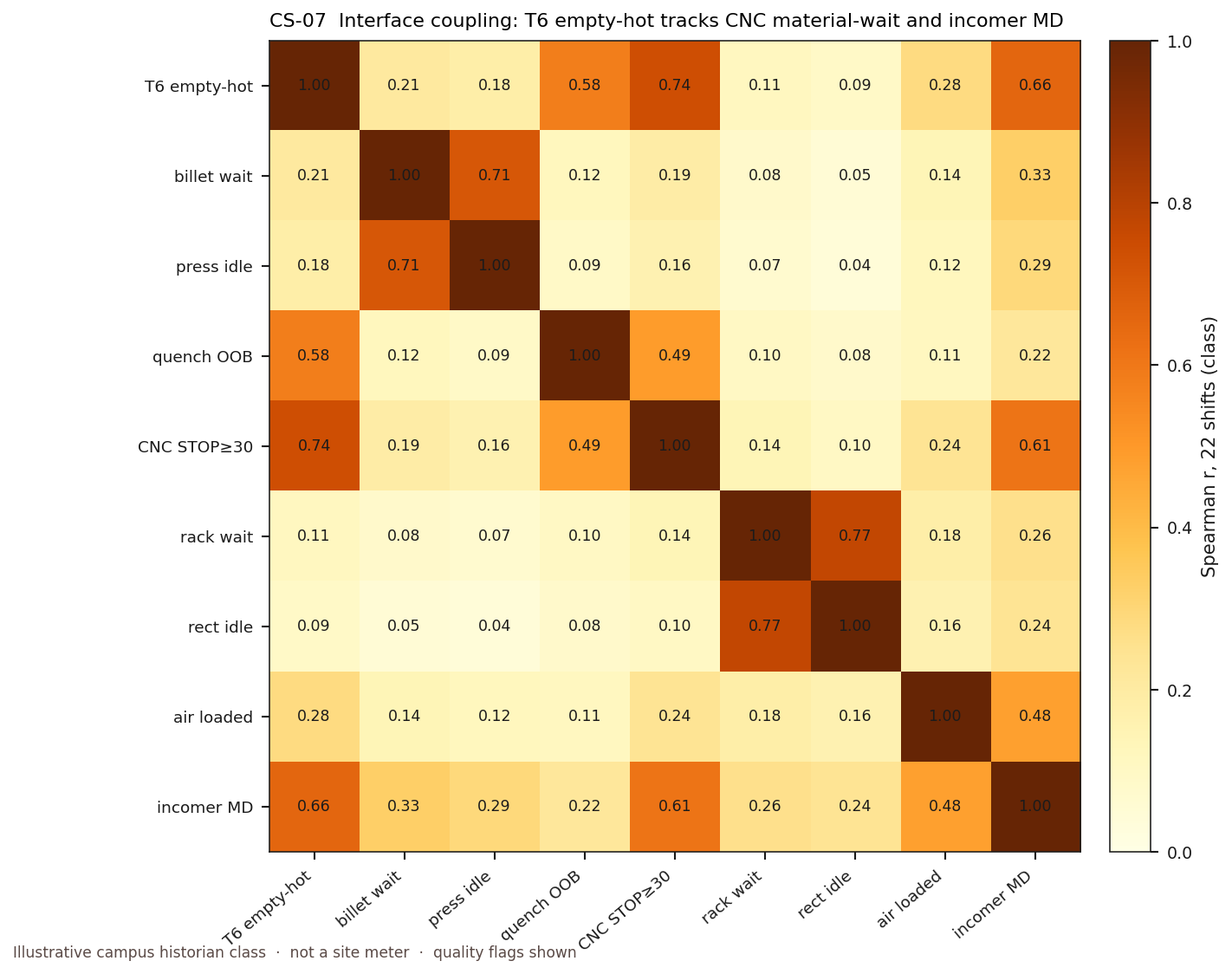
What matters are long stops, especially beyond thirty minutes, on cells that show the same pattern across shifts. The causes are often upstream: material not ready, inspection pending, tooling unavailable, the next job not staged, or a handoff that never happened.
A machine can therefore look like an energy problem when it is actually a planning problem. The useful intervention is not to tell an operator to switch it off. It is to identify why the machine has stopped and put the right owner on the cause.
What these patterns add up to
None of this requires a heroic savings claim to matter.
Cutting avoidable hot idle, improving compatible furnace fills where delivery allows, catching thermal drift before it becomes a larger maintenance or quality issue, closing handoff gaps, avoiding unnecessary thin finishing starts, and focusing attention on genuinely long machine stops all improve the use of assets the plant already owns.
The important point is that quality and delivery stay first. Energy work that conflicts with those priorities will not survive contact with the floor. Energy work that fits inside them has a chance of becoming part of how the plant operates.
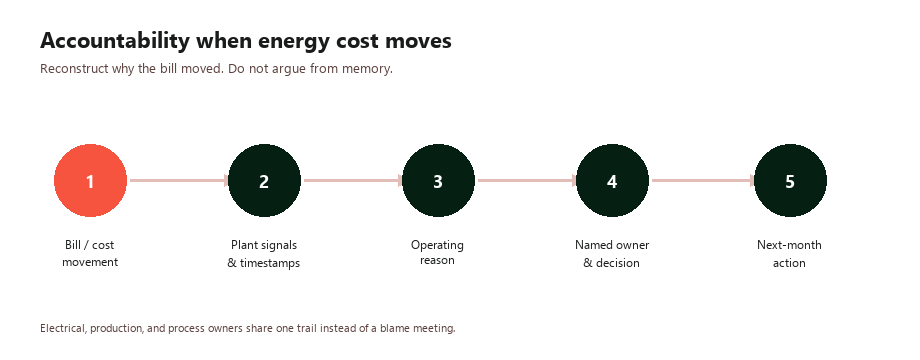
There is another outcome that matters just as much when the electricity bill moves: being able to explain why.
A higher bill shows up as a number. The harder question is what actually changed on the floor. Was it a cluster of starts? Furnaces held hot longer than expected? Thin finishing cycles? Long machine stops? A production mix that forced a different operating pattern?
Without that trail, the conversation quickly becomes blame between electrical, production, and maintenance. With it, the plant can reconstruct what happened, who made the decision, and what needs to change.
How Stamped works with the plant
Stamped starts with signals the plant already has or can connect: equipment state, furnace and oven status, load confirmation, rack and station readiness, production deadlines, and comparable historical runs.
The important part is that the system should not depend on operators maintaining another software system all day. The more context that can be derived from existing machine, SCADA, EMS, production, and historical data, the less the shop has to manually feed.
When a waste pattern appears or power becomes constrained, Stamped turns that context into a specific action with a reason attached.
The system recommends while the plant decides. The record shows what triggered the recommendation, what the owner chose, and what happened afterward.
That record matters beyond individual actions. When the electricity bill moves, the plant has a way to connect the number on the bill back to operating decisions rather than reconstructing the story from memory.
Recipes and live process limits remain outside automated trade-offs unless the plant explicitly approves a governed workflow.
An operating layer for industrial energy efficiency
Industrial energy efficiency is often treated as a measurement problem: monitor consumption, identify anomalies, and report the variance.
In practice, the harder problem is operational.
The plant has to decide whether to start, hold, consolidate, shift, investigate, or continue - while respecting process limits, quality requirements, production commitments, and equipment constraints.
That is the gap Stamped is designed to address.
Stamped connects the signals the plant already generates with the operating context around them, identifies where an intervention is possible, and turns that into a specific decision for the relevant owner. The recommendation is traceable, the plant remains in control, and the outcome can be measured afterward.
The objective is not to optimise energy in isolation.
It is to make the plant's existing operating decisions more informed, more consistent, and more accountable.
Industrial energy efficiency is ultimately an operating discipline. Stamped is the decision layer that helps make it one.